
 Floral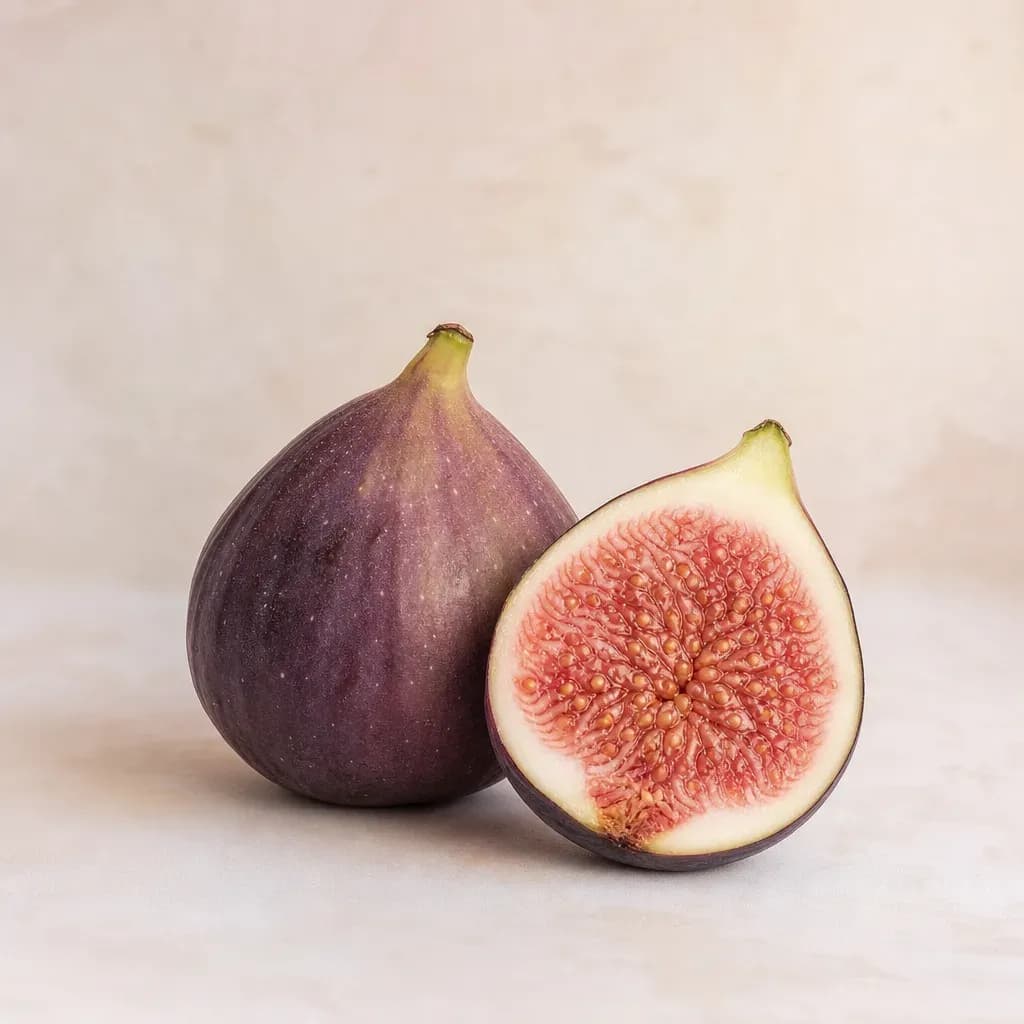
Fig
Certain fruits are true emblems of their region of origin. As such, the fig is a strong symbol of the Mediterranean basin. This small, fleshy, globular pear-like fruit is prized for all sorts of uses, recognized for its many virtues but also for its exquisite taste and scent.
The ancestral history of the fig
The fig is considered to be one of the oldest domesticated fruits. Indeed, a discovery dating back to 2006 demonstrated the cultivation of this fruit through human intervention and through the creation of cuttings in Palestine long ago. Furthermore, traces of figs found are thought to date back to 9400 BC. Moreover, the fig is also a fruit rich in symbolism. In this regard, while Christian tradition recognizes the apple as the fruit from the tree of knowledge of good and evil, Jewish tradition instead embodies this through the fig. Later, in France, it is known that King Louis XIV was a fervent enthusiast of it. He had more than 700 fig trees planted in his royal vegetable garden, at the Court of Versailles.
The production of the fig
The fig is a false fruit. Indeed, it is in reality an inflorescence, that is to say a sort of small sac containing thousands of tiny unisexual flowers. In other words, without outside intervention, these cannot be fertilized since they are enclosed. Yet it is precisely this fleshy vessel that is enjoyed today for its flavor. Generally speaking, even though there are numerous different figs, they are classified into three categories: green (or white) figs, gray (or red) figs, and black (or purple) figs. All of these come from the fig tree, a tree that only grows on dry soil and at sun-drenched latitudes. Thus, the fig develops especially around the Mediterranean basin. It can then be eaten fresh or dried.
Fig in perfumery
While the fig fruit itself releases a succulent scent, its wood and leaves are also fragrant. However, as with many fruits, it is not possible to directly extract an essential oil from this raw material. This is where the chemistry skills of perfumers come into play. The scent of fig is entirely recreated in the laboratory from other essences. Generally speaking, it is an ingredient that gives a fruity, sun-kissed touch to the fragrances containing it. Moreover, fig is also known for its green and lactonic accents. This fruit should not be confused with prickly pear, another raw material but one that has strictly nothing to do with it. The latter is a round or pear-shaped fruit, also edible and fragrant, but derived from a variety of cactus.
While fig features in the composition of many fragrances, several scents clearly place it in the spotlight. Such is the case with Figue Iris by Guerlain, Figue Amère by Miller Harris, Figue de Vigne by Caudalie, Folie de Figue by Esteban, and Fleur de Figuier by Roger & Gallet.
Identity card
- Latin name : Ficus carica
- Origin : Artificielle
- Type : Reproduction
Perfumes with the Fig note
Floral Aromatic
 Woody
Woody Aromatic
 Aromatic
 Floral
 Fougère
 Woody
Woody Floral
 Woody
Woody Floral
 Floral