
Collection
Guerlain’s L’Heure Bleue: the whole line, from 1912 to 2026
Composed by Jacques Guerlain in 1912, L’Heure Bleue received a tribute in 2012, L’Heure de Nuit, and in 2026 an heir that takes over its name. The dates, perfumers, and notes of each, and what sets them apart.
A suspended hour, in 1912
Jacques Guerlain composed L’Heure Bleue in 1912, two years before the war. The house sums up its inspiration in one sentence: the sun has set, night has not yet fallen, it is the suspended hour when man finds himself in harmony with the world and the light.
The historian Élisabeth de Feydeau places the scene on a summer evening in 1911, on the banks of the Seine; the house speaks of a light glimpsed from the Pont-Neuf. Today Guerlain sees it as the legend of an infinite love, an amber floral in which violet and iris melt into vanilla.
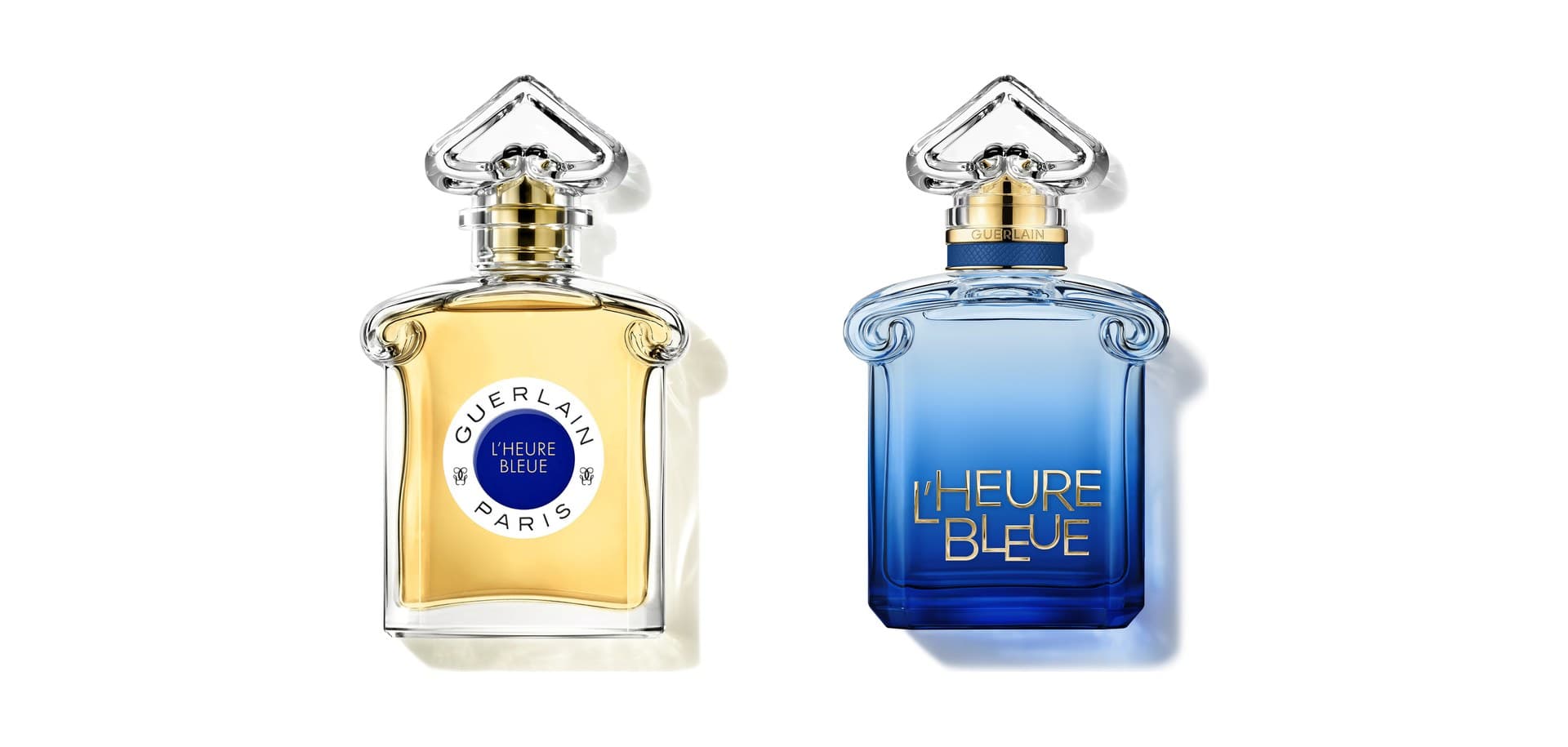
More than a century later, the name covers three distinct perfumes. Jacques Guerlain’s composition, as an eau de parfum and an eau de toilette, has been called L’Heure Bleue 1912 since 2026. L’Heure de Nuit, signed by Thierry Wasser in 2012, pays tribute to it. L’Heure Bleue 2026, by Delphine Jelk, takes over its name.
Jacques Guerlain’s original
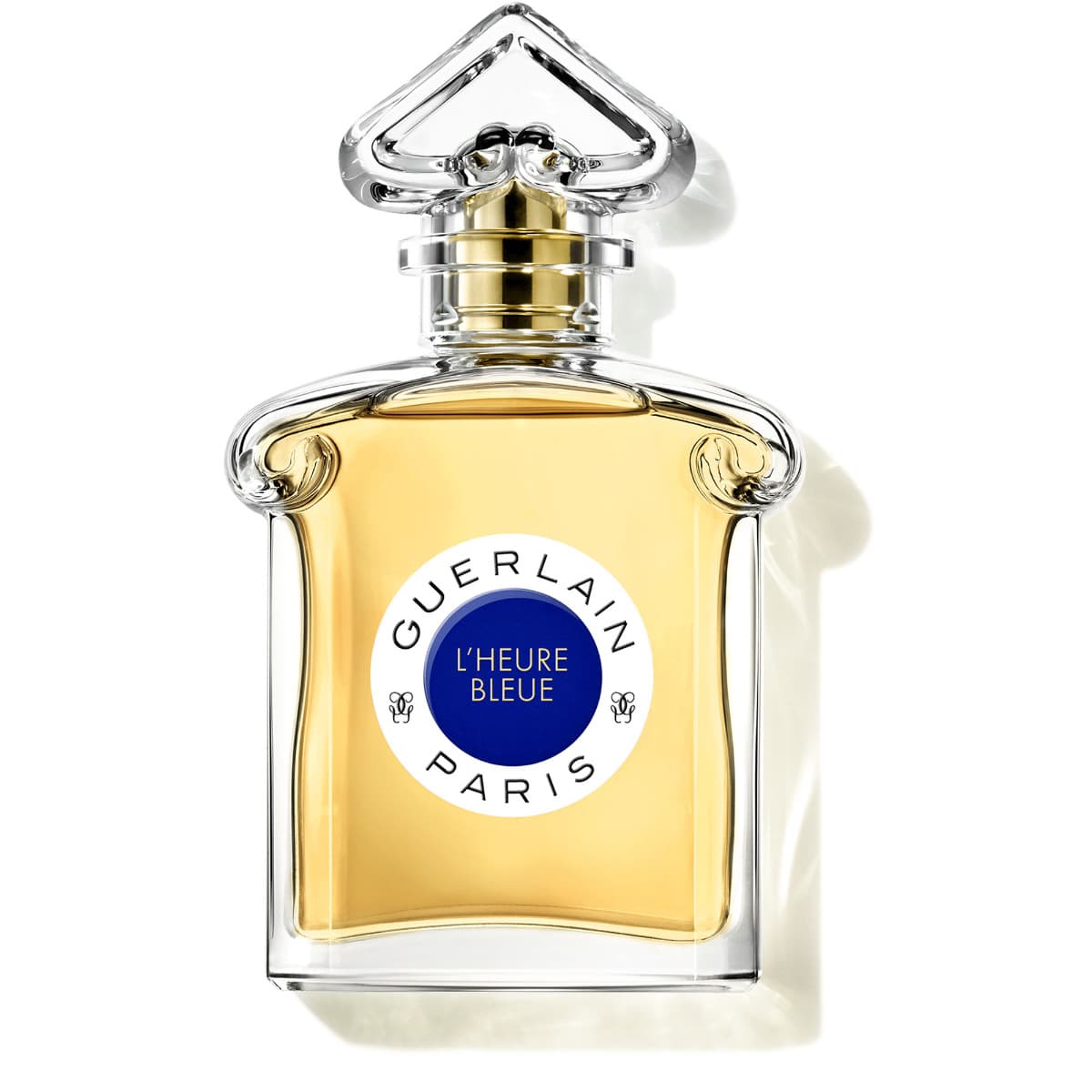
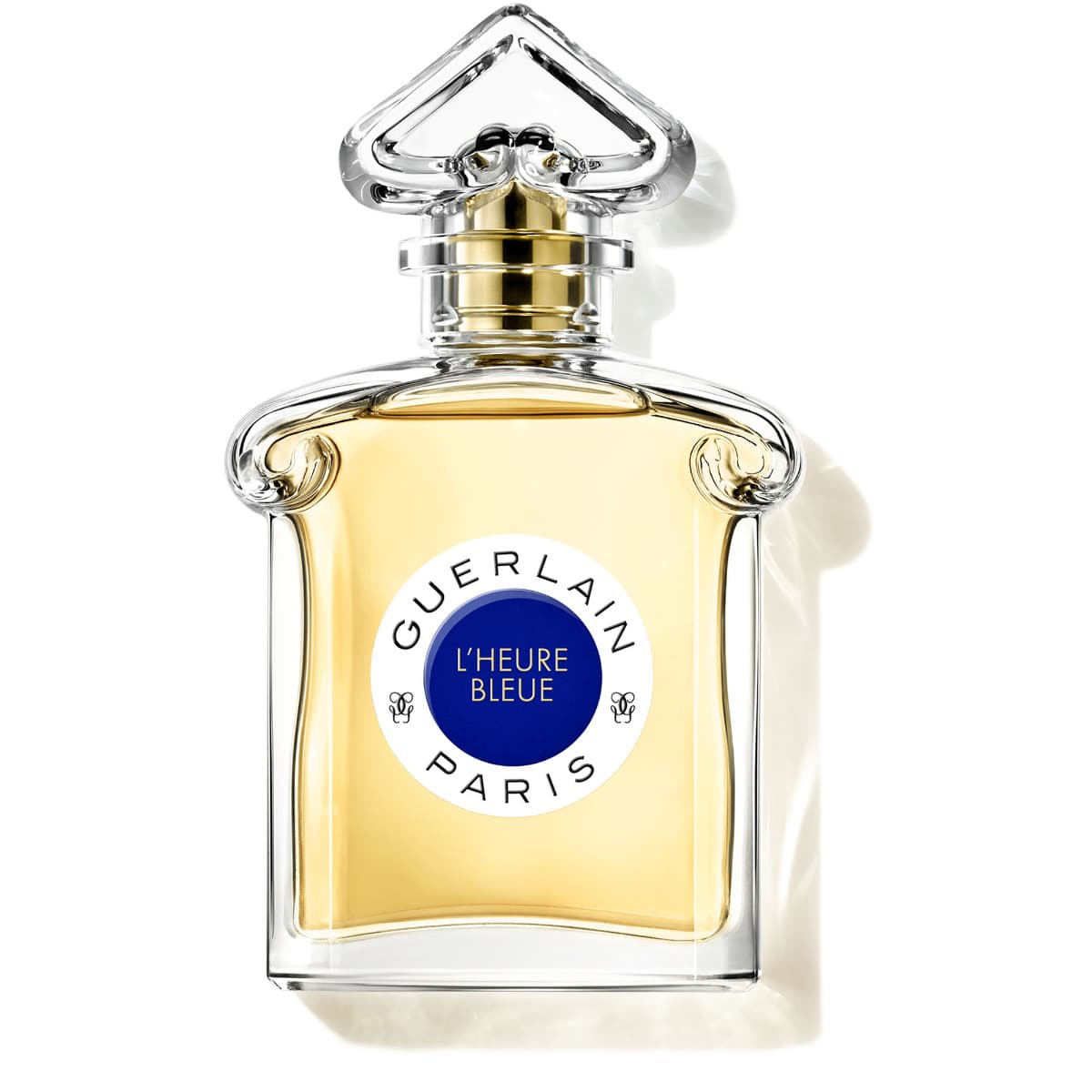
According to the house, the eau de parfum and the eau de toilette share the same pyramid: aniseed and bergamot at the top, carnation and neroli at the heart, iris, violet, vanilla, benzoin, and tonka bean in the base. Both are sold in a 75 ml inverted heart bottle, in the Les Légendaires collection.
1912 · Eau de Parfum · Aniseed, iris, vanilla
L'Heure Bleue
Guerlain
The reference version, renamed L’Heure Bleue 1912 in 2026. Victoria Frolova, on Bois de Jasmin, and Élisabeth de Feydeau describe it as the first Guerlain to contain aldehydes, which lend radiance to the floral bouquet. Frolova counts it among the forerunners of the floral oriental.
1912 · Eau de Toilette · Aniseed, neroli, violet
L'Heure Bleue Eau de Toilette
Guerlain
The same composition in a lighter concentration, which Guerlain describes in the same terms as the eau de parfum. The house illustrates it with a watercolor by Clément Serveau, the Seine embankments facing Notre-Dame, which its archives date to 1948.
L’Heure de Nuit, the centenary tribute
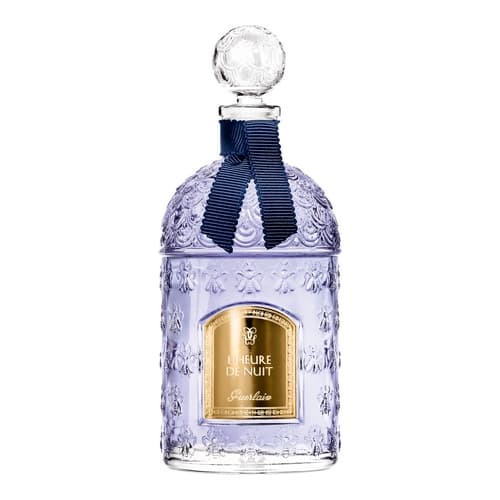
For the perfume’s hundredth anniversary, in 2012, Guerlain entrusted Thierry Wasser with a new orchestration. The house presents it as a “watercolor” variation on L’Heure Bleue and reserves it for its own boutiques, in the Les Parisiennes collection.
2012 · Eau de Parfum · Orange blossom, heliotrope, iris
L'Heure de Nuit
Guerlain
Orange blossom and heliotrope at the heart, iris, vanilla, and white musks in the base, in the 125 ml bee bottle. Thomas Dunckley praises a softer, more powdery version centered on iris, without finding anything truly new in it; Persolaise defends it against purists.
L’Heure Bleue 2026, the name taken over
On August 28, 2026, Guerlain released an entirely new eau de parfum, signed by Delphine Jelk, under the name L’Heure Bleue. The 1912 formula remains on sale under its vintage. The house speaks of a contemporary reinterpretation that keeps the iris and vanilla of the original.
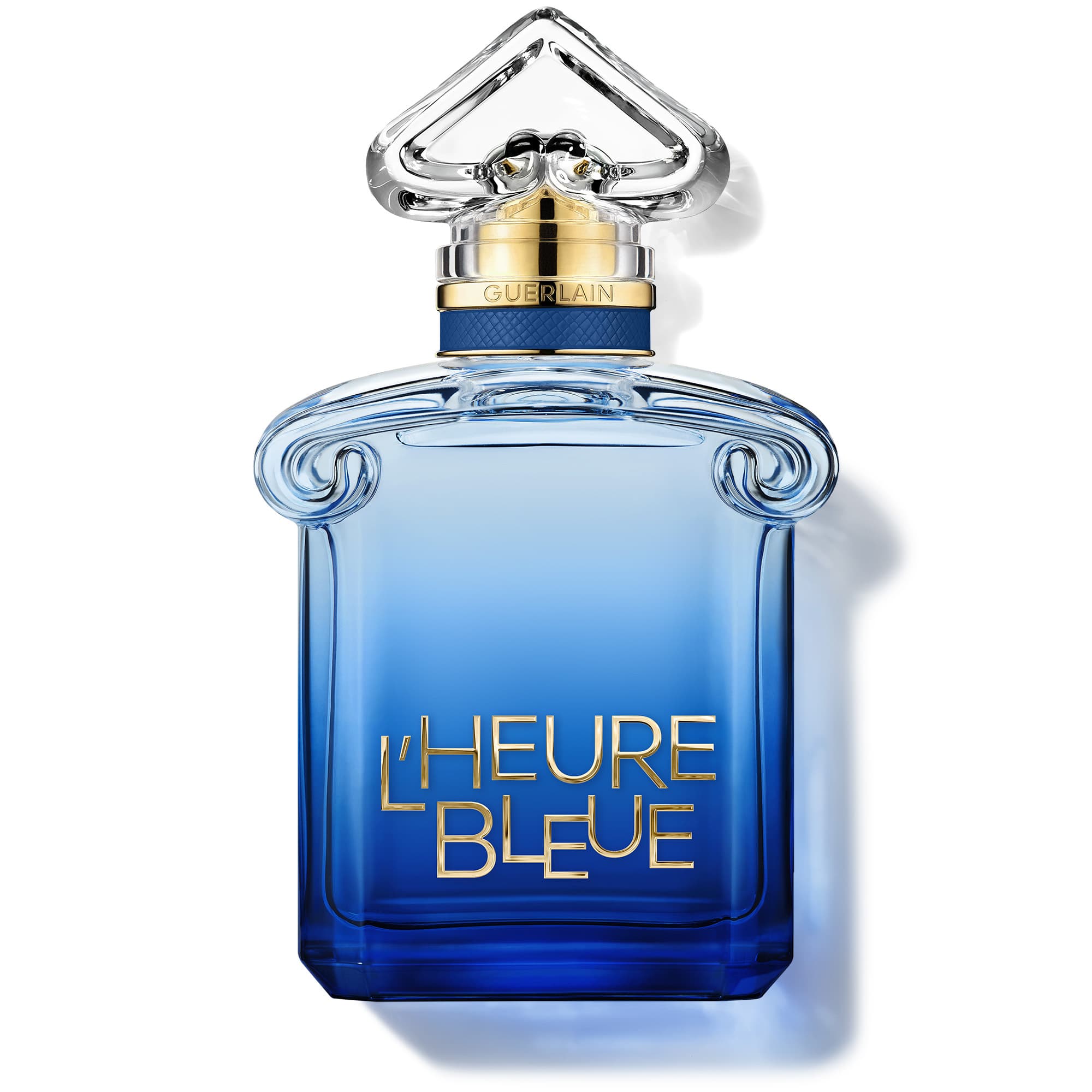
Its centerpiece is an iris tincture obtained from rhizomes selected in Italy, after three years of research at the Orphin manufacturing site. The inverted heart bottle is taken up again, dressed in a blue gradient and designed to be refilled.
2026 · Eau de Parfum · Ozonic accord, iris, vanilla
L'Heure Bleue 2026
Guerlain
An ozonic accord, pear, and neroli at the top, the iris tincture and iris butter with jasmine at the heart, vanilla, ambroxan, and musks in the base. Samantha Holender of Marie Claire praises an airy iris; Fun of La Parfumerie Podcast condemns the juice as well as the reuse of the name.
What separates the two L’Heure Bleue
Only iris, neroli, and vanilla carry over from one version to the other. The aniseed, carnation, violet, benzoin, and tonka bean of 1912 disappear from the 2026 notes, which replace them with an ozonic accord and ambroxan, two materials foreign to the perfumery of the early twentieth century.
Yet the ingredient list Guerlain publishes for the 2026 version declares anethole, with its aniseed scent, and benzaldehyde, which smells of almond. A regulatory list says nothing about dosages, but it keeps a trace of facets close to the original.
The choice of name has divided opinion. Elena Prokofeva would have called the new perfume L’Aurore, so strongly does she smell a dawn rather than a dusk in it; for Fun, taking over the name word for word is “deeply inelegant.” Guerlain’s answer is coexistence: both perfumes remain in the catalog, side by side.
The four L’Heure Bleue entries
 Oriental
 Oriental
 Floral
 Floral
Each entry traces the perfume’s birth, its composition, its bottle and, when it exists, what critics have written about it.