
 Aromatic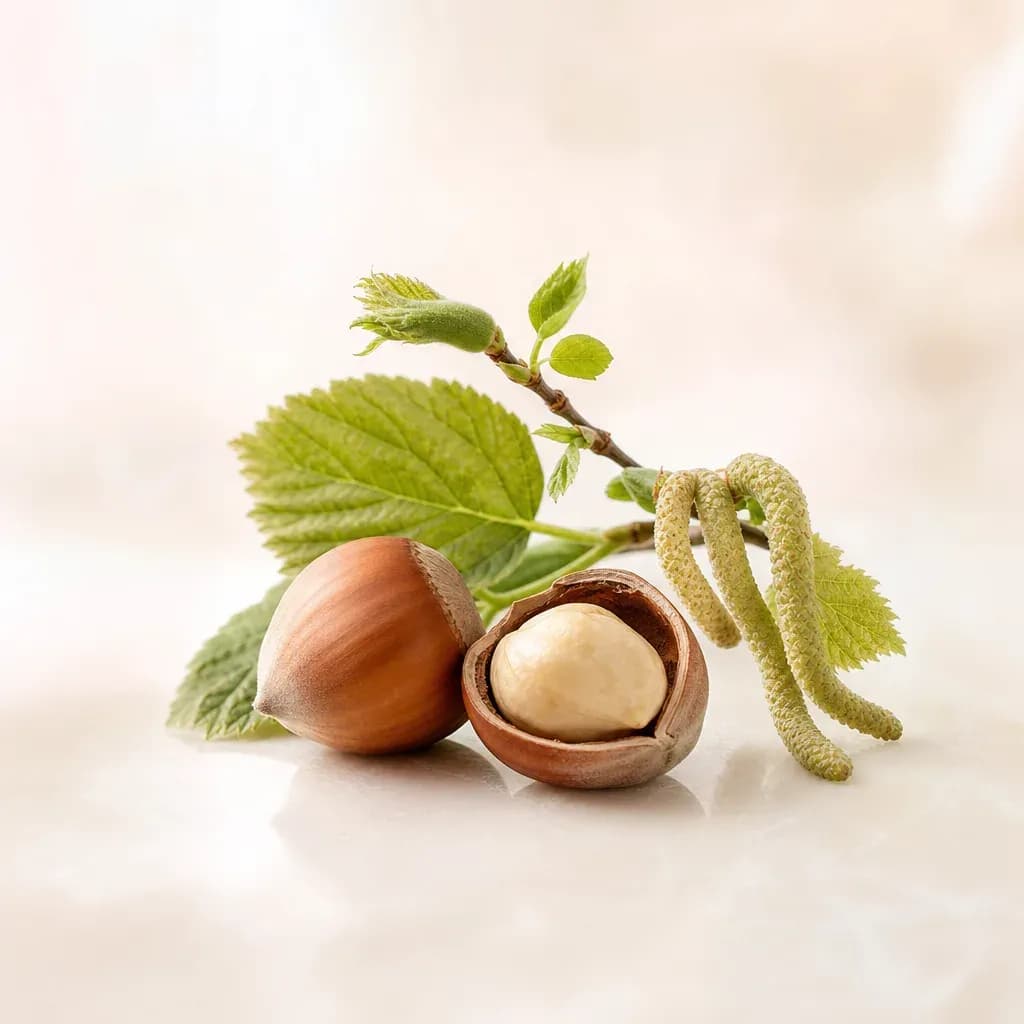
Hazelnut
While fresh, dynamism-packed fragrances are highly appreciated during hot summer days, the trend is quite different in winter. Indeed, this season often pushes toward comforting products with rather autumnal flavors. Hazelnut thus stands out as one of the flagship ingredients.
The hazelnut harvest
The hazelnut is the fruit of the common hazel tree. It is also called a filbert and, by metonymy, also refers to the edible seed contained within this fruit. The hazelnut is a shell with a woody pericarp enclosing a single seed that occupies its entire cavity. This is the part that is eaten. It is a nut of a more or less ovoid shape, capable of reaching 3 cm in length and about 2 cm in diameter. Until maturity, the hazelnut is protected by a husk divided into irregular lobes at its tip. Depending on the species, this husk is more or less enveloping and may or may not be covered with thick, dry, sometimes prickly hairs. Hazelnuts generally grow in clusters of two or three fruits. When these are ripe, the husk dries out and opens at its tip. This is how the hazelnut fruit is exposed to daylight and takes on its brown color. Likewise, it is at this point that the hazelnut seed becomes concentrated in sugar, oil and minerals. This ripening takes place in autumn, and hazelnuts are thus picked from late August through September. Once harvested, the husk must be removed to prevent the hazelnut from molding. Today, Turkey is the world's leading producer and exporter. Hazelnuts are grown there along the shores of the Black Sea, in the northeast of the country. Italy, however, is the world's second-largest producer, far ahead of France, which ranks ninth.
The various uses of hazelnut, including in perfumery
Hazelnut is used in many ways. Its kernel is eaten as a dried fruit and can also be grated into powder or shavings for pastry-making or confectionery. Likewise, when pressed, it yields an edible oil, though one prone to rancidity. Hazelnut is highly appreciated for its taste, but also because it is rich in omega-9, magnesium, iron, fiber, copper, phosphorus, as well as vitamins E and B. It thus helps fight cellular aging, bad cholesterol, colon cancer, rheumatism, anemia, stress and fatigue. In perfumery, however, hazelnut is entirely reconstituted by the perfumer. Its oil is nonetheless used in cosmetics.
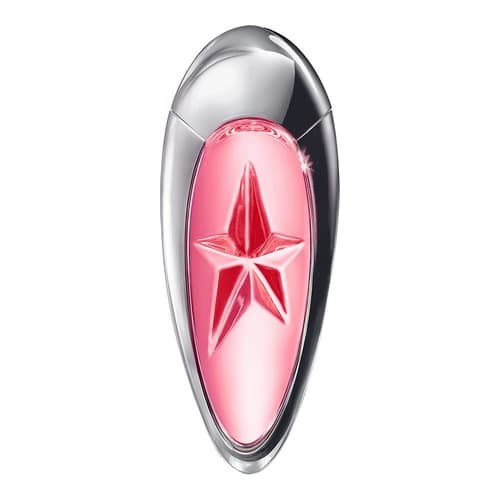
Hazelnut lends fragrances that contain it a green, slightly woody note, at once soft and gourmand. Perfumers particularly appreciate it for its toasted facet, evocative of praline. It is thus proudly featured in Thierry Mugler's very latest fragrance, Angel Muse.
Identity card
- Latin name : Corylus avellana
- Type : Reproduction
Perfumes with the Hazelnut note
Aromatic Floral
 Floral
 Oriental
 Oriental
 Floral
 Oriental
 Oriental