
 Floral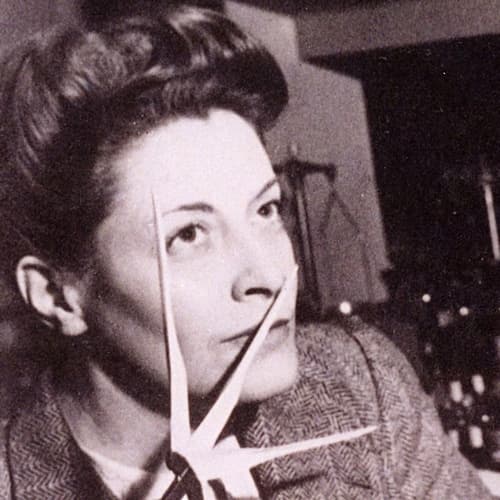
Germaine Cellier
Perfumery has developed considerably in recent years. Yet it remains an ancestral art that has bequeathed us a colossal heritage. Thus, while some perfumes from the last century still occupy our shelves, it is essential not to forget their creators. Among these, Germaine Cellier remains one of the most striking figures of the postwar era. A whimsical character, she remained particularly famous in the United States. So who really lies behind Germaine Cellier's provocative attitude?
The beginnings of Germaine Cellier
Germaine Cellier undeniably drew her character and her love of perfumery from her family background. Indeed, she owed her creative and somewhat whimsical side to her father, Georges, a bohemian jack-of-all-trades who loved nothing more than a good party. Her mother, for her part, was a herbalist. After boarding at a religious school in Gironde, Germaine Cellier moved to Paris at the end of the 1920s to study chemistry. Once she had earned her degree, she was hired in 1930 as a chemist by the French company Roure. However, this early career was slowed by the Second World War. Her fame arrived some time later, in the 1940s. It was at that point that Germaine Cellier met Robert Piguet, a former designer for Paul Poiret who had recently launched his own house. He wanted to embody the renewal of France through his creations. He partnered with Germaine Cellier to launch his very first perfume. Thus, in 1944, the creator crafted for him a fragrance named Bandit. This is how her name began to make a place for itself in the world of perfumes.
Germaine Cellier's towering reputation
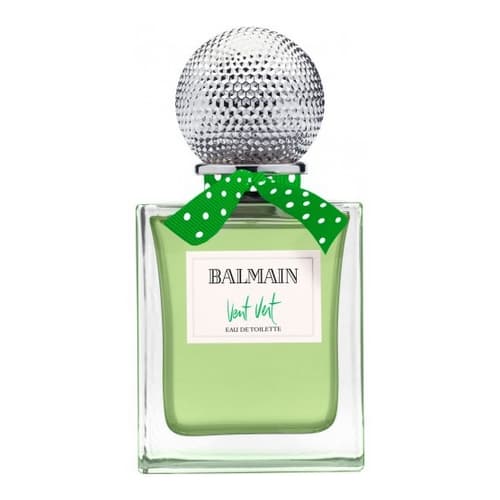
At that time, women were not very present in the world of perfumery. Yet this did not discourage Germaine Cellier. As early as 1945, she crafted the famous perfume Vent Vert for Balmain. Bold in nature, it dared to introduce up to 8% Galbanum into its composition, something never seen before! From then on, success followed success. In 1946, Germaine Cellier crafted Cœur Joie for Nina Ricci, a perfume that became a classic and was sold in a crystal bottle designed by the house of Lalique. In 1947, Germaine Cellier collaborated once again with Balmain, creating the perfume Élysées 64-83. Likewise, in 1948, she turned once more to Robert Piguet and created Fracas, a perfume whose success in the United States was unmatched. From then on, Germaine Cellier was regarded as one of the most contemporary and avant-garde perfumers of her time. Her fragrance was literally adored by some of the biggest names in the world, such as Marc Jacobs, Isabelle Huppert, Jerry Hall, Sofia Coppola, Courtney Love, and others. Thus, having propelled her career forward, Germaine Cellier decided to open her own laboratory, between 1950 and 1961, in Neuilly-sur-Seine. It was in fact there that she created the famous perfume Jolie Madame for Balmain. She would go on to repeat this feat by signing the iconic Monsieur Balmain in 1964.
Germaine Cellier died in 1976, leaving behind a rich olfactory legacy. As though these formulas had outlived her, Fracas and Bandit were relaunched on the market in 1999 with entirely new formulas. Germaine Cellier's creations seem forever timeless. Moreover, this creator's reputation across the Atlantic seems to have remained absolutely intact, as though she were born never to fade away…
Creations by Germaine Cellier
Floral