
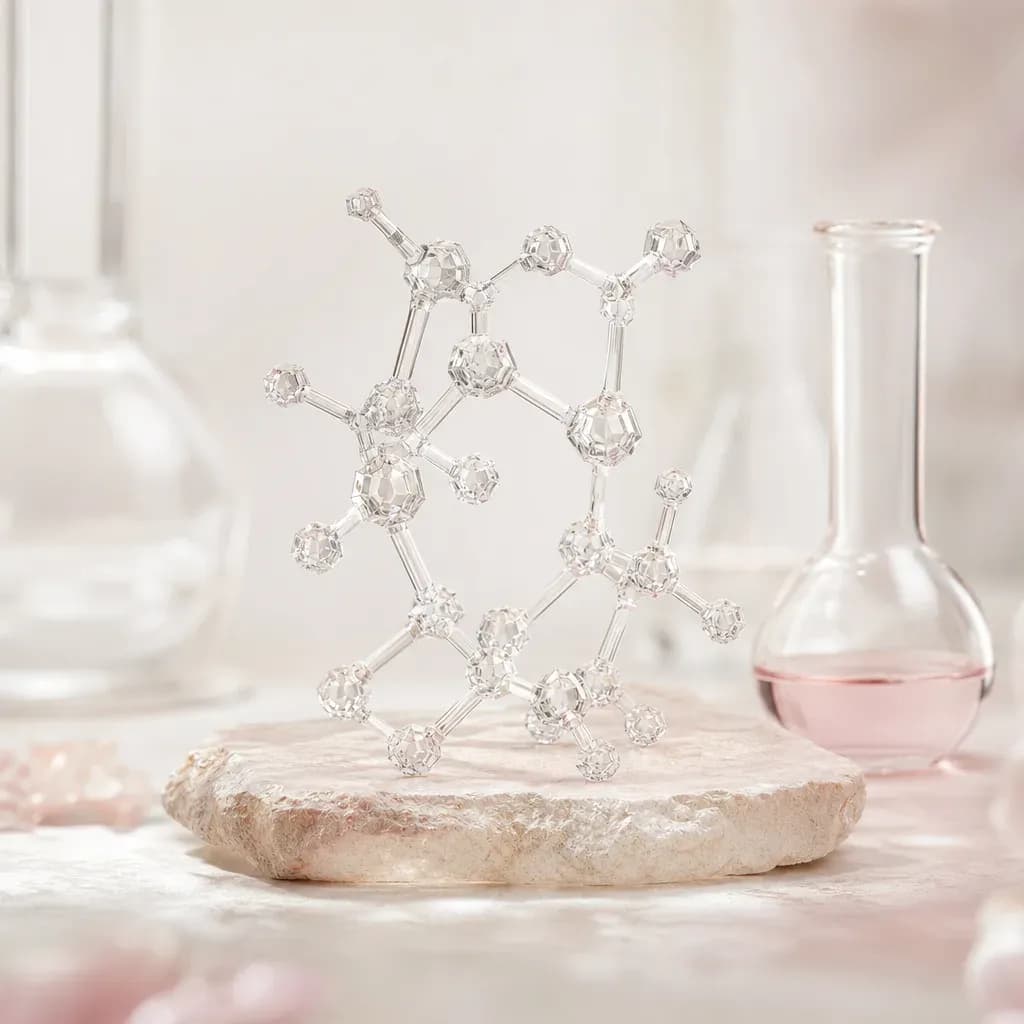
Synthetic molecule
Manufacturing technique
The origins of synthetic perfumery
Synthetic molecules appeared in the perfumery sector at the same time that organic chemistry was developing. To give an idea, it emerged more precisely thanks to the discovery of coumarin by British chemist Sir William Henry Perkin, in 1870. This is a molecule with a scent of hay, almond and tobacco, still widely used in perfumery today. Since that day, countless scents have been reproduced in laboratories. Moreover, perfumery increasingly includes synthetic molecules in its compositions. What is more, beyond providing a greater variety of usable scents for our fragrances, this is a low-cost manufacturing process, which makes it a highly advantageous method of production. Furthermore, it is estimated today that on average only 5% of perfume compositions contain natural ingredients. Nevertheless, synthetic molecules were for a long time singled out by environmental protection organizations such as Greenpeace. Indeed, for many years, these were substances considered harmful to health. Fortunately, synthetic molecules are now highly regulated by European legislation, and many substances have since been withdrawn from the market and from laboratories.
The range of possibilities widened by synthetic molecules
If synthetic molecules are so widely used today, it is simply because there are olfactory notes that cannot be obtained naturally. Furthermore, certain flowers such as lily of the valley, lilac, jasmine, peony, hyacinth or magnolia yield no scent at all when an attempt is made to distill them. However, floral fragrances are not the only ones concerned. Synthetic molecules are also found across multiple families. The green family gives fragrances more brightness and brings together scents of cut grass or spring foliage. The gourmand family synthetically reproduces the scent of vanilla, praline, licorice, cotton candy or almond. The marine family, for its part, reproduces the scent of sea spray with freshness. The musky family gives roundness and a sense of cleanness to the compositions that contain it. Finally, it should be noted that one of the categories most affected by the use of synthetic molecules remains the fruity family. Moreover, only blackcurrant and osmanthus can be used in natural form.
Highly regulated today, synthetic molecules are far from being enemies of perfumery. On the contrary, they have considerably widened the possibilities available to creators, giving free rein to their creativity for our greater pleasure.