
 Floral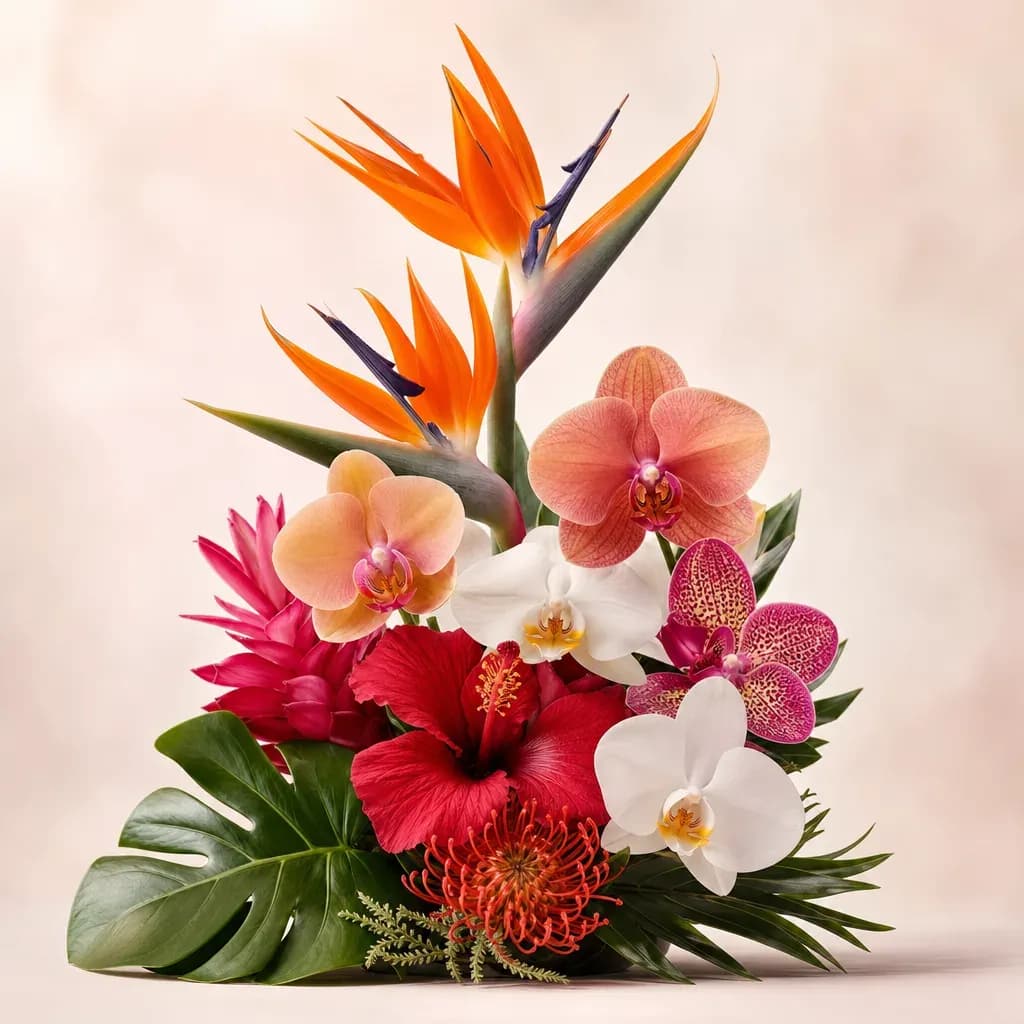
Exotic flowers
Because perfumery is a way to escape and carry us to the other side of the globe with a single breath, many perfumers incorporate exotic flowers into their compositions. Renowned for their unique colors and intoxicating scents, exotic flowers are unmatched at providing immediate pleasure and stirring up vacation cravings ahead of time! So, which plants are capable of conjuring a postcard-worthy landscape within a fragrance? Which are the most famous among them? Here is everything to know!
What are the main tropical floral notes?
Exotic flowers are very often used in women's fragrances. First of all, like all floral ingredients, they are ideal for heightening the sensuality of those who wear them. Beyond this aspect, exotic flowers must also evoke a sun-kissed, far-flung elsewhere. Coming from afar, these plants are associated with idyllic landscapes such as a tropical forest, a beach with blazing sand, or clear water from a mysterious waterfall or a turquoise lagoon. Exotic flowers allow perfumers to write sun-kissed formulas. Generally, they are not purely floral but are also sweet and balsamic, tangy and comforting. They combine a tender lightness with a very pronounced floral scent. Frangipani flower, tuberose, tiare flower and ylang-ylang are among the green, radiant notes found within this broad olfactory category.
How do perfumers bring exoticism into their fragrances?
While perfumery is an age-old art, exotic flowers only appeared in this field more recently. On one hand, exoticism implies exploring a distant land. It was therefore necessary to wait until travel became more widespread. Furthermore, not all floral and exotic scents can be extracted directly from the plants. Moreover, some exotic flowers are protected and their use is strictly regulated. Very often, perfumers therefore turn to science, and the scent of the flowers is, in reality, recreated in a laboratory. Only the latest technological advances have made it possible to explore this tropical register. To do so, perfumers work hand in hand with flavorists. Together, they compose floral, far-off notes, as though steeped in sunshine.
Jasmine, star of exotic perfumery
While perfumery now uses a great many exotic flowers, one of them stands far above the rest. Jasmine is the most widely used of them all. Grown mainly in India and North Africa, jasmine is an absolute symbol of femininity. It is now also grown in Grasse, the world capital of perfumery. Its exceptional quality reserves it exclusively for fine perfumery. Jasmine is an exotic flower generally used in the heart notes of feminine fragrances. Fruity, powdery and animalic, jasmine is an exotic flower that captivates with its richness and its many facets.
Perfumes with the Exotic flowers note
Floral