
 Floral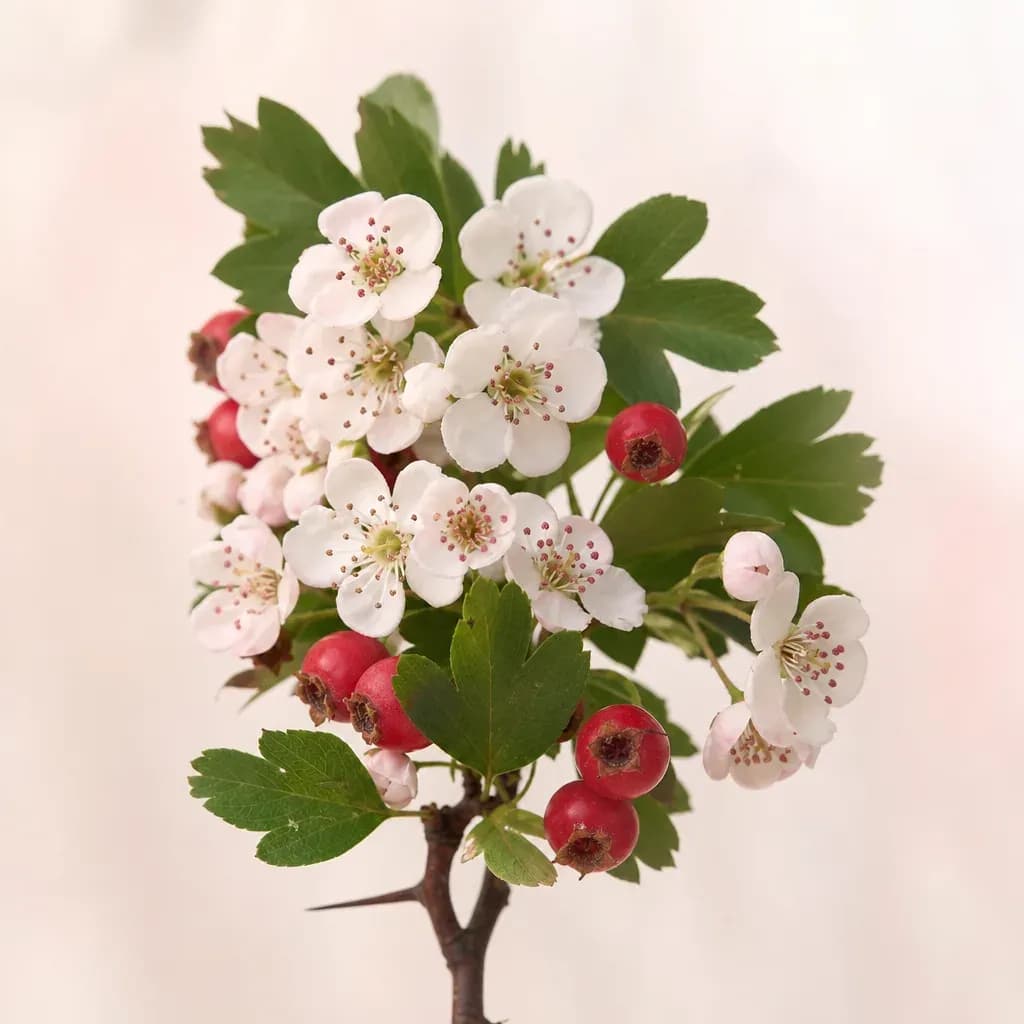
Hawthorn
Hawthorn: the little wildflower of our orientals and our floral bouquets. Hawthorn is a small thorny and wild shrub, a distant cousin of the rose bush. With an extraordinary longevity, it has often been credited with magical powers of protection; yet although sacred, its small berries already delighted our prehistoric ancestors, who gathered them.
Today hawthorn is barely consumed anymore, but the phytotherapeutic virtues and delicate scents of its flowers inspire creators who wanted to create a fragrant note in its delicate and powdery image to dress beautiful floral compositions or delicate orientals.
Hawthorn: the small and venerable wild rose
While hawthorn has many magical powers, including that of reaching absolutely canonical ages, it was linked to numerous beliefs as early as Antiquity. Hawthorn branches were used to protect against the wrath of the sky and were said to be favored spots for birds' nests…
Hawthorn is also said to be linked to a Gaelic legend of May 1, in which a branch of it had to be hung on the door of stables and barns to prevent witches' spiders from entering...
Whatever the case, whether for its berries, its mysterious powers or its delicate and suave floral scent, hawthorn, a plant typical of our temperate climates, is particularly appreciated and known to all, regardless of the era. Perfumery therefore took an interest in hawthorn in order to create a floral and voluptuous note in lovely florals.
Hawthorn notes are created in perfumery thanks to anisic aldehyde and Guerlain
Hawthorn is unfortunately not a plant from which an essential oil can be extracted, so a synthetic molecule had to be created from its scent to reproduce the both floral and wild fragrance of the little thorny shrub.
It seems that Guerlain was the first to use anisic aldehyde reproducing hawthorn in its fragrance Après l’Ondée in 1906. This lovely powdery floral sought to recreate the particular scents of a flowering garden, slightly damp just after a summer rain. Guerlain thus created a poetic and nuanced fragrance where citrus and orange blossom soar toward the floral and powdery hearts of hawthorn of course, but also iris, violet and orchid, before ending in a deep, vanilla-like sillage of sandalwood and benzoin. Après l’Ondée remains a great fragrance appreciated by the most discerning noses.
The 2000s saw the return of hawthorn's delicate scents in lovely fruity florals, including Flower by Kenzo by Kenzo, Emporio Night Her by Armani, or also Ocean Blue by Escada. Sometimes a top note, sometimes a heart note, hawthorn notes pair with fruits, marine notes, citrus, or also pink pepper to offer their suave, powdery scents. In Beige by Chanel, hawthorn as a top note is, for the first time, paired with ylang-ylang and then with white flowers tinged with honey.
Hawthorn is therefore very much at ease in floral fragrances with many nuances, as its floral and powdery facets are easy to blend and particularly useful as a fixative for scents. However, hawthorn also appears in certain orientals where it becomes gourmand and fruity while remaining light and vaporous alongside musks or patchoulis. Some woody masculine fragrances use hawthorn to soften the fragrances and the powdery qualities of certain flowers...
Identity card
- Latin name : Crataegus
- Origin : Non applicable
- Type : Reproduction
Perfumes with the Hawthorn note
Floral