
 Aromatic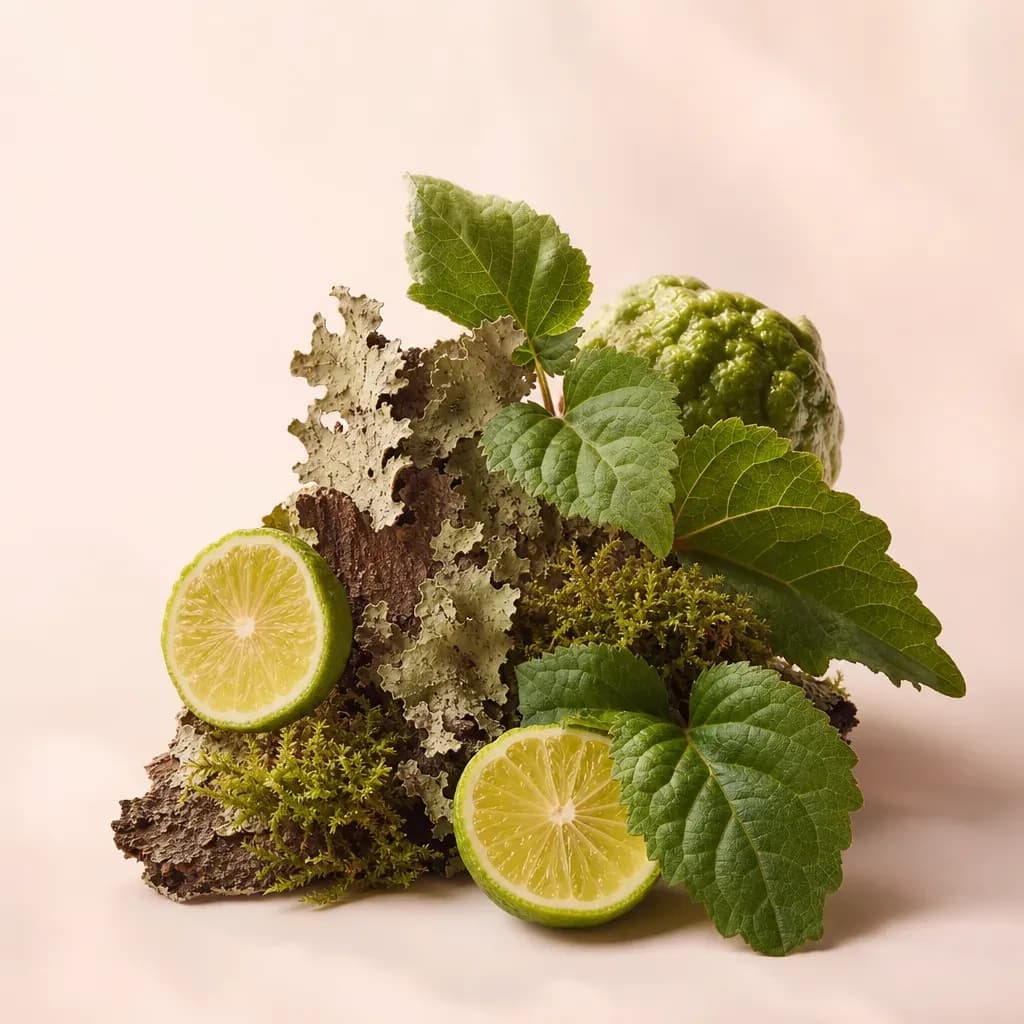
Perfume of the Chypre Accord
The chypre accord is a base for perfumes whose components are extracted from a lichen, which grows on the oak tree. Today, perfumes with a chypre accord also include labdanum cistus, oakmoss, patchouli or even bergamot. The success of the chypre accord took root in 1917 thanks to François Coty. Since then, the chypre accord has continued to evolve and has become one of the most complex accords in perfumery. Perfumes with chypre accords are strong and powerful fragrances, fragrances with character. The chypre accord comes in numerous subfamilies such as floral chypre, green chypre, fruity chypre or even leather chypre.
The evolution of chypre accords in perfumery
In 1917, François Coty imagined a perfume named “chypre,” thereby inventing a new family, that of the chypres. Chypre accords were then built on a typical olfactory family, namely bergamot as a top note, a floral heart composed of jasmine or roses, and woody base notes such as oakmoss or patchouli. Chypre accords thus enjoyed great success, and it can be noted that every house created its own perfume with a chypre accord, such as Guerlain with Chypre de Paris in 1909, or Que Sais-je by Jean Patou and the famous Femme by Rochas. Little by little, the chypre accord took on greenness, as with Vent Vert by Balmain, turned fruity with Parure by Guerlain, or turned leathery with Cabochard by Grès. In 1971, Clinique brought the chypre accord, which had fallen out of fashion, back into vogue with Aromatics Elixir.
Chypre accords and their olfactory pairings
Given their strong character, and the evolution of the chypre accord, it pairs remarkably well with almost every olfactory family, mainly florals, fruity notes or woods. Among the floral chypres, notable exceptional perfumes include 1000 by Jean Patou, released in 1972, where bergamot appears as a top note and patchouli as a base note. One also thinks of 24 Faubourg by Hermès, released in 1995, or Coco Mademoiselle by Chanel, released in 2001. Chypre accords pair remarkably well with fruity notes, as in Amor Parfum du Soir by Cacharel, where blackcurrant enhances this chypre accord. Another fruity chypre accord can be found in Azalée by Lalique. Among the great perfumes with chypre accords are Cuir by Molinard, Cuir Beluga by Guerlain, Chance by Chanel, Dahlia Noir by Givenchy, and Diva by Ungaro.
Essential to perfumery, chypre accords make fragrances with character. Introduced in 1917 thanks to François Coty, the chypre accord boasts to its credit wonderful fragrances that come remarkably well in floral chypre, green chypre, fruity chypre or even leather chypre.
Perfumes with the Chypre accord note
Aromatic Chypre