
Le XVIIIème Siècle
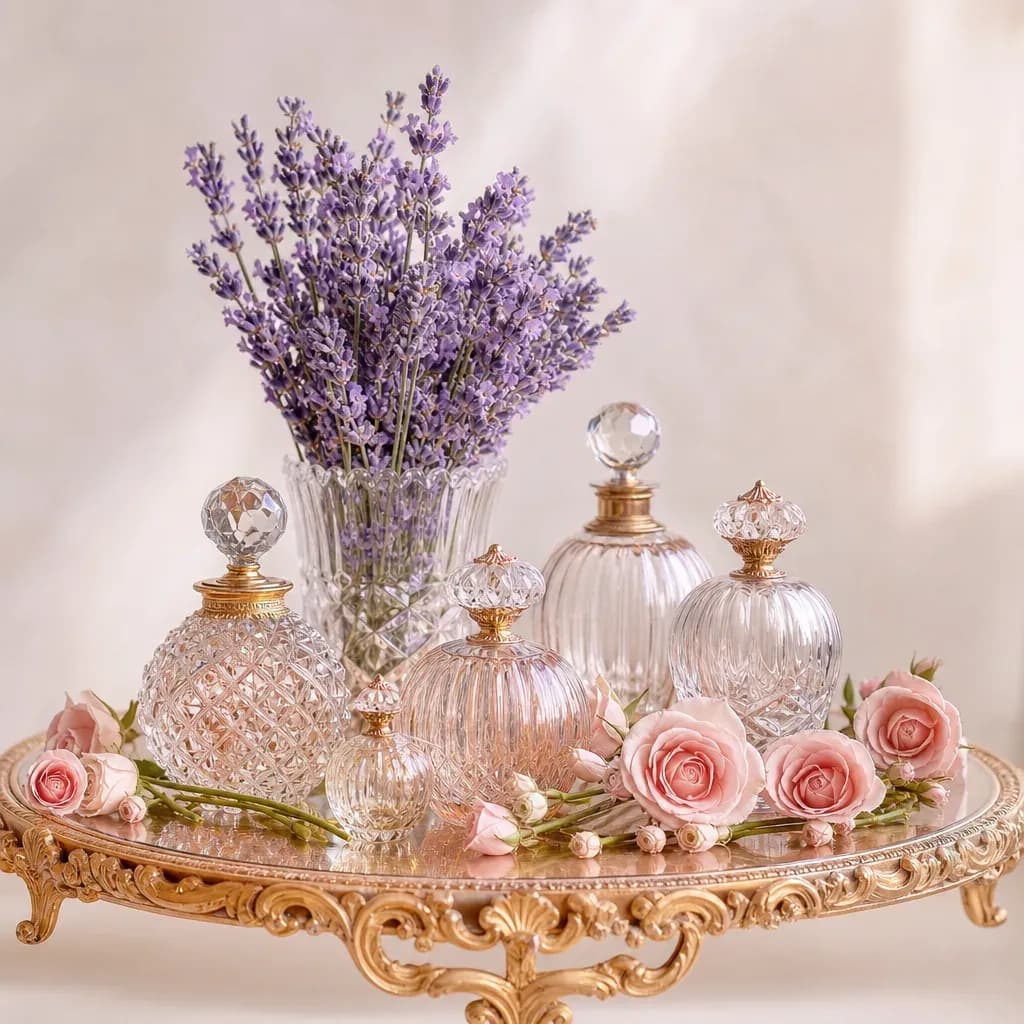
The 18th Century, the beginning of perfumery as such
While the 18th century saw excessive use of perfume intended to offset a lack of hygiene, the 18th century began to turn toward gentler creations. Thus, the Court, which used opulent perfumes with jasmine or oakmoss to excess, scenting its wigs, gloves and handkerchiefs, gave way to more elegance and distinction. Furthermore, the 18th century marked a return to greater moderation and hygiene.
The return to cleanliness
As the reign of the Sun King came to an end, customs within the Court evolved. Hygiene gradually seemed to resurface and bathing became less feared. Moreover, spaces intended for the washing ritual began to appear in homes. These were the dressing room and the bathroom, previously entirely unknown. The population gradually became cleaner and the need to mask body odors became less pressing. Thus, olfactory notes became more refined and a certain intolerance toward heady scents even emerged. Fashion favored countryside and natural effluvia, and scented preparations became more fanciful and sophisticated. The Court of Louis XV then took on a genuine scent of cleanliness and was even described as a scented court. What is more, famous figures such as Marie-Antoinette in turn greatly contributed to the rise of perfumery. Eaux de Cologne as well as fragrances from Germany met with flourishing success. Among the best known, certain floral bouquets became essential, such as Eau Divine, L'Eau de Mille Fleurs, l'Eau Bouquet du Printemps, or l'Eau Admirable. Similarly, citrus rind fruits also began to be distilled…
Advances in perfumery in the 18th century
Although glove-makers turned perfumers enjoyed a certain prosperity, they suffered from the crisis in the leather trade. Thus, the profession of glove-making was gradually abandoned in favor of perfumery in its own right. Perfumers from Grasse became particularly renowned and their expertise continued to develop. Thus, they gradually learned to work with citrus rinds that had until then been unexplored, such as that of bergamot. Likewise, it was in the 18th century that the enfleurage method appeared. Jean-Marie Farina, for his part, became a master in the field and began exploiting Eaux de Cologne based on alcohol and citrus. What is more, many, including physicians from the Cologne faculty of medicine, saw therapeutic virtues in this product. The success of this product then began to spread throughout Europe. Similarly, artificial soda was discovered in 1791 and made it possible to create soap. This amounted to a genuine revolution in the world of cosmetics. Indeed, the famous Eugène Rimmel considered, as early as 1880, that toilet soap-making was one of its most important branches.
Nevertheless, despite these numerous innovations and this dramatic return to cleanliness, the glorious destiny of perfumery did not last. In reality, the revolution dealt a fatal blow to this sector of activity.