
The 19th Century
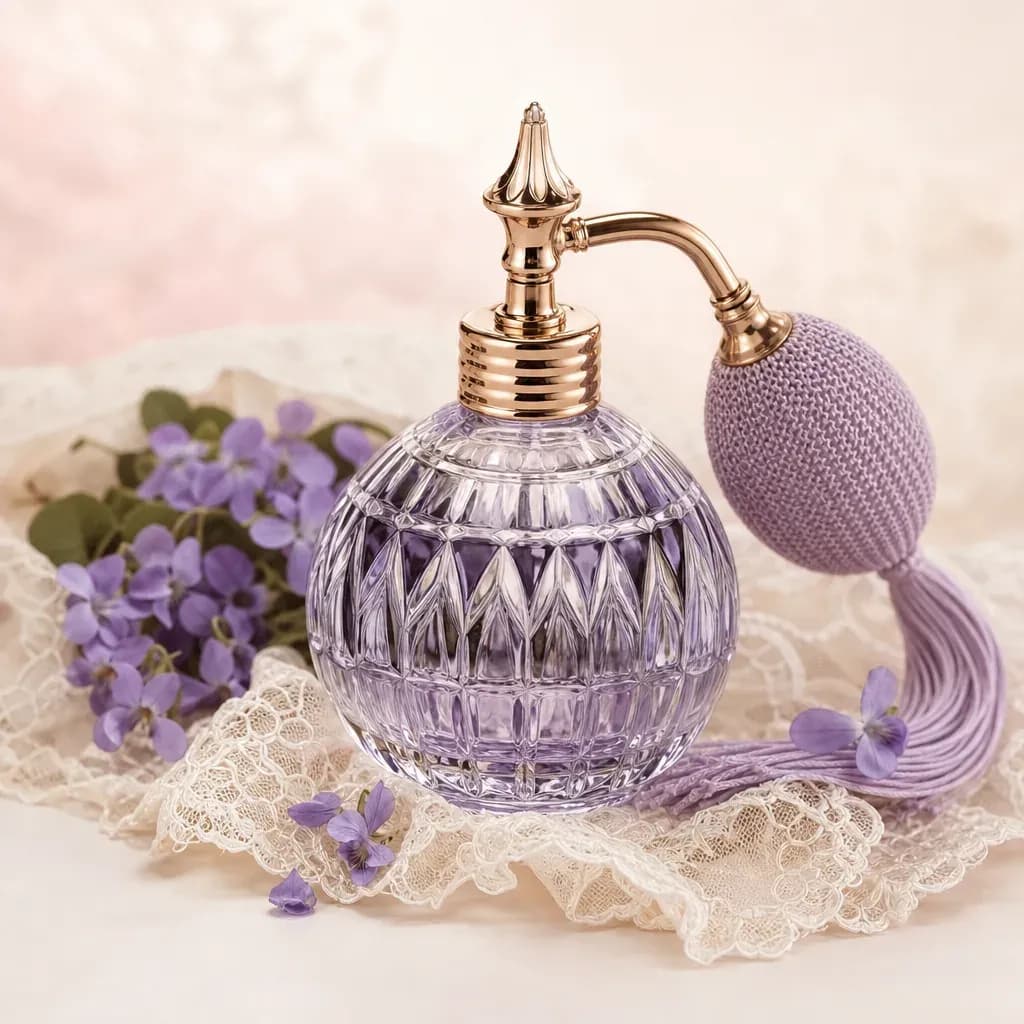
The 19th century, the return to grace of perfumery
The Revolution is one of the most significant events in the history of France. Nevertheless, it is also a major chapter in perfumery. Indeed, wanting to clearly express their discontent, the French people totally rejected everything that evoked, closely or remotely, the Royal Court, starting with perfumery, which was highly evocative of kings. Fortunately, the trend changed radically as early as the Directoire.
The evolution of trends in the 19th century
The period running from the Renaissance to the first half of the 19th century was marked by a strong reliance on dry perfumery. This notion, sometimes abstract nowadays, referred to the many scented powders sold in sachets, mostly intended to be placed inside clothing and wigs. These were sold loose on large stalls in big jars. Nevertheless, the development of Eau de Cologne reversed this trend and gave rise to a genuine enthusiasm for liquid perfumes. What is more, the early 19th century was marked by considerable research aimed at creating synthetic products. It was at this point that researchers began isolating interesting olfactory molecules in order to invent chemical products with no natural equivalent. Although the price of these products was initially prohibitive, it quickly became affordable. This allowed perfumers to create numerous unprecedented compositions. Likewise, the French Revolution abolished guild edicts, which considerably freed up trade. As a result, it became much easier for perfumers to obtain new raw materials from abroad. Perfume thus became the true reflection of the personality of those who wore it. Accordingly, a certain olfactory extravagance appeared under the Directoire. Moreover, this was a historical period deeply marked by an image of showy luxury, and it was in this context that essences based on musk, civet or nutmeg came to accompany the many outfits inspired by Greek costumes of the time. On the other hand, the end of the 19th century saw the emergence of furs and shawls from India, which were scented with patchouli for preservation purposes. This is how this raw material established itself as one of the iconic scents of the late 19th century.
The great names of 19th century perfumery
The 19th century is considered a golden age of perfumery, during which great names in the industry, still known today, settled at the heart of our capital. In this respect, a certain Jean-Marie Farina, heir to the founder of the famous house of the same name, settled in Paris and became the official supplier to Napoleon I. His house was sold to Léonce Collas in 1840, who in turn sold it in 1862 to Roger et Gallet. Likewise, among the renowned perfumers whose name will surely be familiar, note that Guerlain settled in Paris in 1828. This extraordinary house was built by the hands of Pierre François Pascal Guerlain. At the time, it sold eaux de toilette, soaps, creams, pomades and thermal preparations. Its elegant style soon captivated the whole of Europe, establishing this master perfumer as one of the most renowned in our country. What is more, this reputation was only confirmed when Guerlain created the Eau de Cologne Impériale for Empress Eugénie. Likewise, the 19th century was the era in which the houses of Édouard Pinaud, Bourgeois, Molinard, Gellés Frères, Piver and Worth were founded.
Generally speaking, the end of this century simply returned to heady scents. So, whether or not one is fond of this style of scent, there is no doubt that they contributed greatly to the discovery and exploration of synthetic chemistry.