
Le Peuple Hébreu
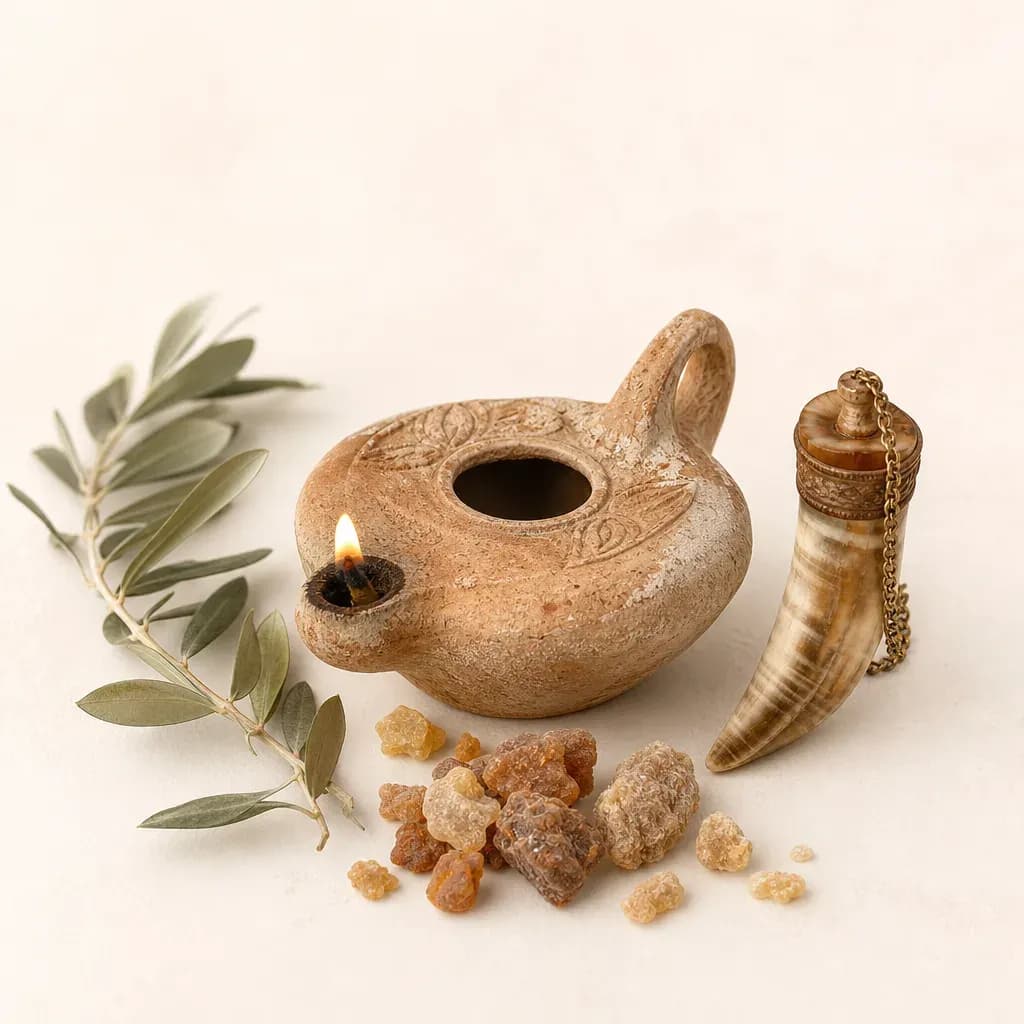
The Hebrew People and the Sacred Meaning of Perfume
Perfume has always been an ingredient directly connected to faith. During Antiquity, it served as an offering to deities to secure their protection. Its very name comes from the Latin “Per fumum,” which literally means “through smoke.” This long tradition also concerns the Hebrew people.
Perfume in the Bible
The Bible is a religious book. Nevertheless, it is also a work that teaches a great deal about the daily life of the peoples of the time. In this instance, it turns out that personal hygiene was already of prime importance at this stage of history. Moses thus defined in the Bible the various uses of baths, for women as well as for men. Likewise, the Bible teaches that it was customary to sprinkle oneself with perfume before every meal. In addition, wines were flavored and aromatics were burned to fill banquet halls with a delicate scent. Furthermore, priests were also a kind of apothecary who mastered to perfection the use of plants and aromas. They thus created blends of ingredients whose recipes were closely guarded and which sat at the crossroads of medicine, cooking, perfumery, and magic. Nevertheless, among the many ingredients used, incense stood out as the finest. It was reserved exclusively for worship. Finally, it should be noted that perfume also played a role in funerary rites. Although the Hebrews did not practice embalming as the Egyptians did, they sprinkled the deceased with scented water and anointed their bodies with aromatic oils.
The Plants Used by the Hebrews
Several verses of the Bible highlight the fragrant ingredients used by the Hebrew people. The Lord said to Moses: procure aromatics, resin, onycha gum, galbanum, aromatics I say, and pure incense, as the perfumer works with no other ingredients than salt, a pure and holy product. Also, among the most commonly used fragrant products, myrrh is very often mentioned in the Bible. Likewise, cinnamon, a tree that releases its scent through its bark, appears to have been a key ingredient. Aloes and nard were also very popular products among the Hebrews. Nevertheless, nard proved to be a very costly perfume, coming from a small fragrant grass also called Indian verbena. That said, the Hebrews seemed to possess a fairly elaborate olfactory culture and also used other ingredients such as stacte, a droplet found inside grains of myrrh, cassia, a product derived from a tree, or fragrant shells drawn from the depths of the seas. All these ingredients were then tied to strong, religious symbolism. Moreover, according to the Bible, certain scents are considered the scent of the righteous, others correspond to a sacrifice, others still serve to idolize, while the last ones are considered the perfume of knowledge.
To this day, in-depth studies in the history of religions have allowed us to establish that perfume was just as developed among the Hebrew people as it was in the time of Ancient Egypt.