
Le Moyen-Âge
The Middle Ages, an era of contrasts and rich movements in terms of perfumery
While perfume had always played an important role since Ancient Egypt, it experienced a marked decline in the West at the start of the Middle Ages. Indeed, the fall of Rome, the expansion of Christianity and the barbarian invasions forced this art to take refuge in the Byzantine Empire. Nevertheless, perfumery made its great comeback on the occasion of the Crusades.
The decline of perfumery at the start of the medieval era
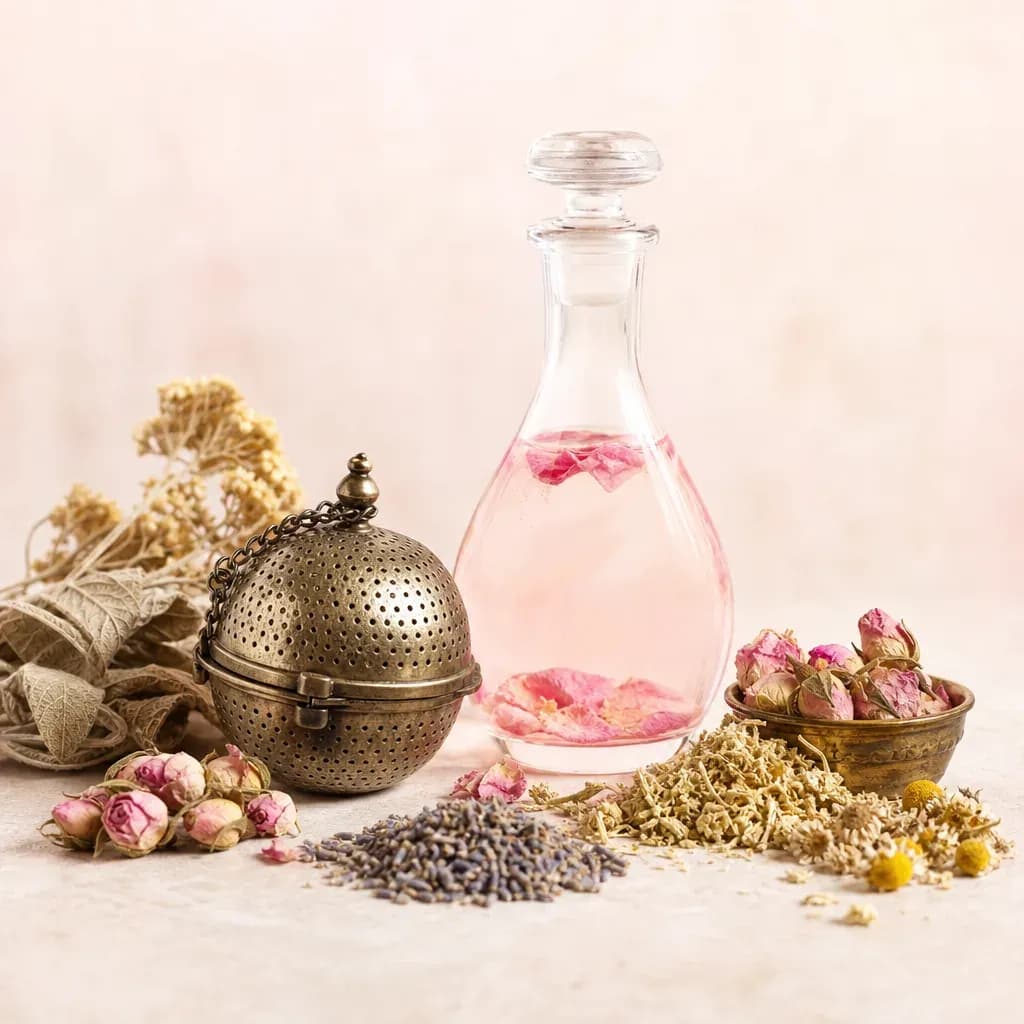
In the medieval era, perfumery experienced a definite decline. The fathers of the church even made scents a symbol of the frivolity of the pagan world and firmly condemned their use. In reality, only medicinal and pharmaceutical techniques were preserved by monks. The latter grew aromatic plants in their gardens such as sage, lavender, rosemary and thyme. Overall, perfumery became nonexistent in the West from the 5th to the 11th century.
The return of perfumery from the 11th century onward
The Crusades, carried out from 1096 to 1291, along with exchanges between East and West, considerably developed trade routes. This is how new scents and spices were reintroduced into Western habits. Little by little, scent boxes appeared on stalls while scented baths developed. Westerners discovered new ingredients such as musk, sandalwood, amber, clove, rose, jasmine, and others. Likewise, a new pendant called a pomander, or “pomme de senteur”, was worn by an increasing number of nobles. Furthermore, people attributed curative and aphrodisiac virtues to this object. From the 11th to the 15th century, Venice became the great center of distribution and trade. The Spanish and the Arabs brought many perfumed products there, and competition quickly arose between apothecaries, aromatics sellers and grocers. Thus, these various trades were regulated more precisely from the 13th century onward. In parallel, around 1320, alcohol distillation was discovered, radically transforming the art of perfumery and paving the way for our modern perfumes.
Notable events in the perfumery of the Middle Ages
Among the most notable uses in terms of perfumery in the Middle Ages, the year 1347 stands out as unavoidable. Indeed, it was at that moment that a Genoese ship returning from the Black Sea brought back the plague, contaminating the whole of Europe. To overcome this dreadful disease, people used all sorts of sprinklings, fumigations and inhalations based on plants. Likewise, laurel and rosemary were burned in order to purify houses.
Furthermore, the other notable anecdote in the perfumery of the Middle Ages concerns Queen Elizabeth of Hungary. Indeed, she inspired the first named perfume, in 1370. It was called Hungary Water and was a fragrance based on rosemary, lavender and alcohol. Composed by a hermit, it was an essence supposed to preserve beauty intact until death. If history is to be believed, it must be noted that the charm worked, since Queen Elizabeth of Hungary married the King of Poland at the age of 70.
The scented rituals of the Middle Ages
Finally, regarding the use of scented essences in daily life, it would seem that the second part of the Middle Ages was very strongly marked by scents. At that time, men and women bathed regularly in scented public baths. A true place of social exchange, meals were even served there. Also, while the sexes were initially mixed in the baths of the Middle Ages, they were very quickly separated due to numerous scandals. Nobles, for their part, had private baths. Likewise, perfumes were also present at the table, and it was customary to offer guests small bowls of perfume intended for rinsing hands. Indeed, at that time, people ate with their fingers. Finally, it should be noted that violet, lavender and orange blossom perfumes were highly appreciated by wealthy ladies and served to assert their elegance. They would thus conceal flowers under their clothing or in sachets folded into their linen.
While the Middle Ages was not the most prolific period in terms of olfactory innovations, it nevertheless managed to preserve the great traditions of old, resisting at all costs the barbarian invasions as well as the religious opposition of the time.