
 Aromatic
Le Galion
An article from l'Officiel de la Mode published in 1956 stated: Parfums Le Galion belongs to the same family of passionate fragrances, at once ardent and subtle, which create a sillage of admiration behind those who know how to wear them. A focus on the history of this unconventional and highly prestigious house.
Le Galion perfumes
AromaticThe history of Parfums Le Galion
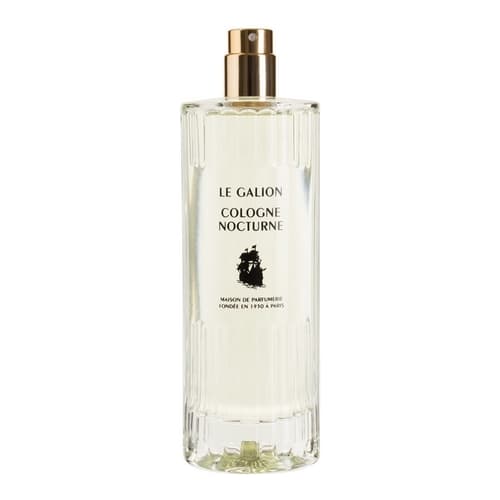
Parfums Le Galion first appeared in 1930 thanks to Prince Murat, a descendant of Joachim Murat and brother-in-law of Napoleon I and the King of Naples. He developed a very first collection of essences named Chypre, Indian Summer, Champs de Mai, Il N'est qu'à Moi, Fougère and Galion d'Or. Nevertheless, he soon sold his company to the perfumer Paul Vacher, already recognized in the profession at the time. Vacher trained under Paul Guerlain and then worked at Lanvin, where he notably created Arpège in 1927, before founding his own house. From 1936, Paul Vacher created Sortilège, a fragrance containing more than 80 natural essences, a true flagship of the house that met with immediate success. Several soliflores followed, including Iris and Tubéreuse. Each fragrance issued by Parfums Le Galion was thus crafted using the finest raw materials. From then on, Parfums Le Galion and Paul Vacher became the symbol of the highest perfumery. Vacher was a nose as esteemed as Ernest Beaux or Jacques Guerlain. As such, he was the one entrusted with the creation of the iconic Miss Dior. After collaborating with the greatest names, Paul Vacher only left Parfums Le Galion in 1975, succeeded by his daughter, Dominique De Urresti. However, shortly afterward, in 1980, Parfums Le Galion was sold to an American group. Due to poor management, the house gradually fell into obscurity until its rebirth, 30 years later, in 2014, with an exceptional collection.
The rebirth of Parfums Le Galion
Nothing destined Parfums Le Galion to come back to life, save for today's consumers' love of old houses. The new Le Galion collection was thus developed by a trio of perfumers made up of Nicolas Chabot, Thomas Fontaine and Dominique De Urresti. The latter seems to be reviving the formulas of that era. Nevertheless, this new collection runs up against new bans on many raw materials that were used at the time of the original release of these fragrances. As a result, some perfumes have been slightly modified out of necessity. The new Le Galion fragrances thus pay fine tribute to nine great essences of the house, bringing together the elegance of Iris from 1937, the greenness of Tubéreuse from the same year, the fresh notes of Whip from 1953, the sensual effluvia of 222, the emotion of Sortilège, and the chypre and aromatic character of Eau Noble. Parfums Le Galion thus offers a journey through time and a deep dive into the heart of its history.