
Infusion
Manufacturing technique
What is infusion?
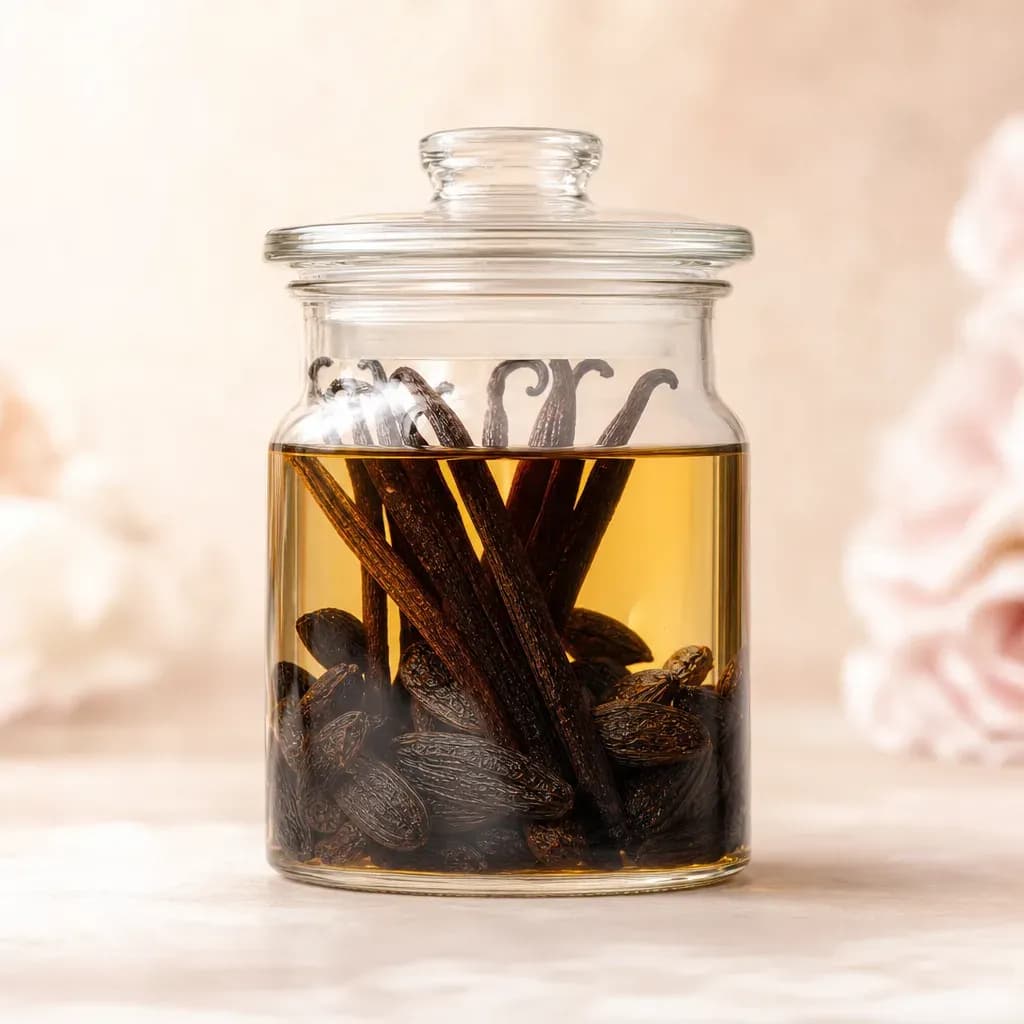
In perfumery, the infusion technique consists of letting flowers or plants steep in a boiling liquid. This method is comparable to that of steeping tea. The idea is to extract the aromas of a plant by dissolving them in a liquid that is initially heated and then left to cool. This process is the opposite of decoction, in which the liquid is kept boiling. However, while making tea only requires the use of water, in perfumery the method is quite different. The solvent used is not necessarily water. It can be oil or alcohol. This technique proves to be particularly costly and is intended for extracting olfactory elements from dry materials such as vanilla pods. The latter is brought into contact with a solvent liquid and placed in a vat brought to a boil. The mixture is then cooled and kept that way for a minimum period of six months. As one can gather, infusion is a technique that requires patience as well as a large storage space, hence its high cost. This is why it is a skill that is very rarely used today.
Plants suited to infusion
Despite its extreme simplicity, infusion remains a technique that must be properly mastered for it to be effective. Furthermore, not all plants are good for infusing. The scented part of the plant must be fragile enough to release its identity upon contact with the heated substance. In general, most stems and leaves as well as flowers are perfectly suited to infusion, which is not always the case for certain fragrant roots or harder materials such as bark. Overall, infusion is suited to plants that are rich in volatile, subtle and aromatic compounds. Moreover, decoction cannot be used on this type of plant, since too high a temperature for too long would destroy their odorous components.
Today, infusion is reserved more for herbal tea enthusiasts than for perfume makers. Nevertheless, this technique is undeniably part of our heritage and constitutes one of the oldest skills in the olfactory field. Having first appeared in antiquity, it has managed to endure into our modern era and, in this sense, stands as excellent evidence of the early beginnings of perfumery as we know it today.