
Enfleurage
Manufacturing technique
The enfleurage technique
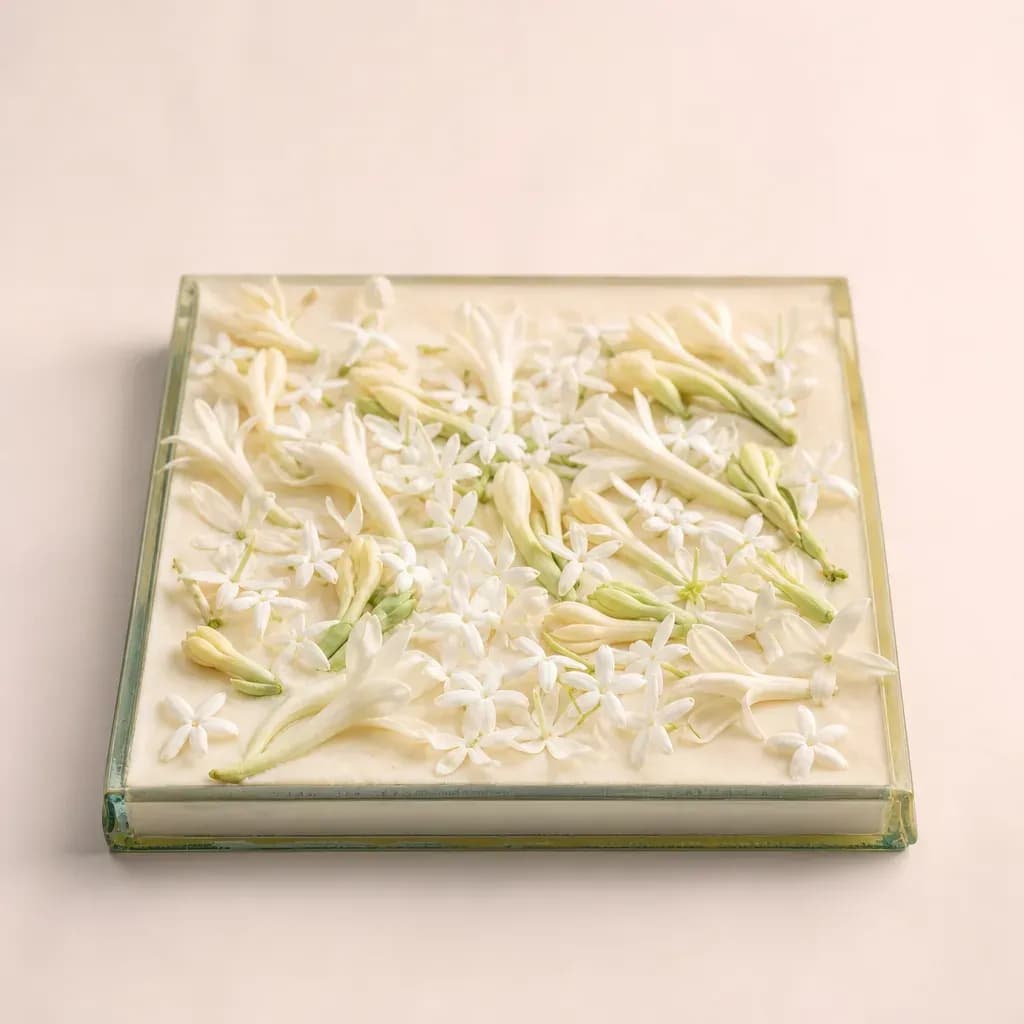
Enfleurage is a perfume manufacturing method based on the use of a fat and its ability to naturally absorb odors. Two types of enfleurage stand in opposition. Hot enfleurage, also called maceration, consists of infusing flowers or other odorous raw materials in a fat that has been previously heated. The flowers placed in this mixture are then regularly replaced until the fat is completely saturated with fragrance. The paste obtained is called pomade. Cold enfleurage, for its part, consists of spreading fat over the panes of a glass frame before covering it with flowers. The flowers are then renewed until the fat is thoroughly impregnated with their scent. This process can take up to three months, and a single kilo of fat can absorb up to 3 kg of fragrance from the plants. Once the pomade is obtained, the process is the same whether it is cold enfleurage or hot enfleurage. The pomade is gently melted before being decanted through ethyl treatment. Thus, under the action of heat and a churning device, the odorous molecules are dissolved in the alcohol. The mixture is then cooled and the fat is filtered out of it. Likewise, the alcohol is removed by vacuum distillation. Thus, only the heart of the fragrance remains, also called the absolute.
Choosing between hot and cold enfleurage
Hot enfleurage has been known since antiquity. Nevertheless, it is a technique unsuited to certain flowers that are too fragile. Indeed, some of them cannot withstand being heated. This is notably the case with jasmine, tuberose or jonquil. In this case, cold enfleurage should be used, a more costly but particularly effective method widely used in the Grasse region. Furthermore, if cold enfleurage is a more demanding process, it is because it requires substantial labor, considerable time as well as a large number of frames. Likewise, it must be carried out in a cooled environment, otherwise the outside temperature alone would be enough to melt the fat.
Of course, this is not the only perfume manufacturing technique. Nevertheless, it proves to be an ancestral process resulting from our substantial heritage in terms of perfumery. It thus stands as a kind of historical testimony while still being highly effective today.