
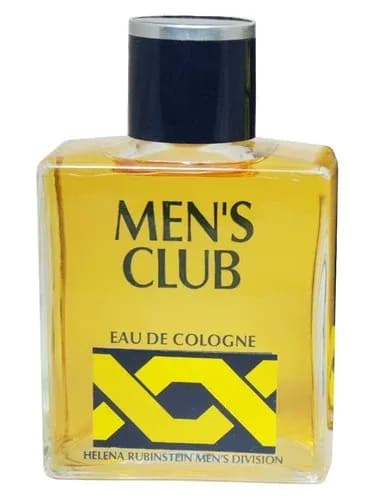
 Fougère
Helena Rubinstein
Helena Rubinstein is a beauty house born in Australia in 1902, named after a Polish woman who invented the profession of esthetician as much as her own legend. Absorbed into the L’Oréal group in two stages during the nineteen-eighties, it has refocused on luxury anti-aging skincare, and perfumery now holds only a marginal place within it.
FougèreHelena Rubinstein
Born in 1870 in Kraków, Helena Rubinstein left for Australia at eighteen. The Valaze cream, drawn from a recipe of herbs, bark and almond, found its first customers among her friends and earned her a shop in Melbourne in 1902, where she added a treatment room.
This space, part shop and part institute, is the ancestor of the beauty salon. She handed the business to her sister in 1908 to travel the world and meet scientists, convinced that beauty was a matter of science before it was a matter of taste.
The Paris salon opened in 1912 at 255 rue du Faubourg Saint-Honoré, and the press of the time made it the social and scientific event of the year. The beauty house she opened there served as the model for everything the profession would produce after her.
She is credited with the classification of skin types, oily, normal or dry, established in 1910; the first scientific tests applied to cosmetics; the training of estheticians and the first school dedicated to them; and, at the end of the nineteen-thirties, the acquisition of the patent for the first waterproof mascara.
Her death in 1965 opened a series of transfers: Colgate-Palmolive in 1974, Albi International in 1980. L’Oréal took over the Latin American and Japanese markets in 1984, and the whole company in 1988, which explains the two dates found depending on the account.
The brand now belongs to L’Oréal Luxe and focuses on high-end anti-aging skincare. Its management has publicly stated that the house had strayed into makeup and perfume, given its original expertise: it is this refocusing that explains the reduced place perfumery now occupies.